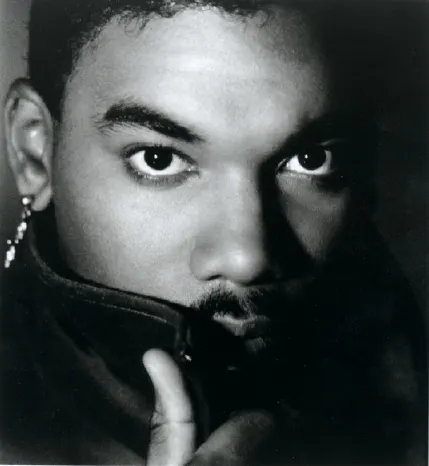
As the years go by, I realize that tributes following the passing of Michael Jackson’s collaborators will sadly continue in the years ahead. Nonetheless, I never thought Bryan Loren would join this sad list so soon, when he should have been celebrating his 60th birthday next May.
With the recent leaks of many unfinished tracks by Michael Jackson circulating online, most fans are happy and relish the chance to satisfy an appetite that will never truly be sated. I don’t deny having once been among this group, but time, various experiences and ups and downs have changed my perspective on the matter.
Now, my first thought in such moments is that there are always people who are unhappy or suffering from a situation that often amounts to theft or piracy. At the time of his death, it’s terrible to realize that Bryan Loren was probably one of the most wronged figures in this area — and that this must have affected the course of his life.
His journey nonetheless began under the best auspices, with a passion for music and an early start with instruments in childhood, which led to versatility both on keyboards and drums. He became a professional in studios at 15, before becoming a member of Fat Larry’s Band two years later and developing his skills as both a composer and a producer.
Such early promise naturally pushed him toward a solo career at 18, with singing and production complementing his many talents deserving of the greatest acclaim.
Indeed, it was as a producer that his career broadened, with collaborations ranging from Janet Jackson and Whitney Houston to Randy Jackson and Sting — to name just the most famous during the late 1980s. I also remember singer Shanice and her album Discovery, which had once attracted Michael Jackson’s attention.
Michael then returned to the studio without Quincy Jones and was looking for a producer from the new generation for a project then titled Decade — not yet Dangerous. This was an important turning point in the King of Pop’s career, and Loren was expected to embody it and reach a special dimension. Unfortunately for him, that did not happen. After two years of involvement in the project, he was suddenly replaced by Teddy Riley — an injury that perhaps never healed.
In the end, he was credited for different studio sessions as a musician, but many of his songs remained locked away — except for “Do The Bartman” on The Simpsons album, “Superfly Sister” on Blood On The Dance Floor, and “Mind Is The Magic” for Siegfried & Roy. The outcome might seem rather sparse and frustrating, especially as he was also considered for the Dangerous Tour, but was ultimately not chosen.
Facing failure can also be a way to bounce back. Unfortunately, it seemed that this disappointment haunted him and grew over the years. These leaks of his productions for Dangerous, for which he earned nothing, could not have helped…
When I launched my book project Let’s Make HIStory, I had of course contacted Bryan Loren to get his testimony. He politely declined at the time, to my great regret, although I respected his decision. As fate would have it, I later learned that the association Music First was organizing his visit to the Abbey Road Institute in Paris for a seminar in September 2016.
Of course, I secured a spot, thrilled at the opportunity. Bryan Loren was there to speak about his collaboration with Michael Jackson, even though he had initially seemed reluctant to discuss the subject only months earlier. Throughout the seminar, he went into detail about his sessions with the King of Pop, wanting to demonstrate his influence and what he contributed during the creation of the album.
He also mentioned that Tommy Mottola, head of Sony Music, once came to the studio to express his dissatisfaction to Michael Jackson — to the point that Jackson cried — which may have contributed to his being replaced by Teddy Riley.

rom my perspective, I greatly appreciated his words. I even took the opportunity to give him a copy of my book; he appreciated the gesture and explained more about why he had declined to participate — not wanting to reopen old wounds. I told him I understood and was happy for that exchange.
While working on my next book Book On The Dance Floor, I used my memories from that event with a 1998 interview in Black & White magazine to write my chapter about “Superfly Sister.”
Today, we are stunned by his passing, but I realize he reached out for help in recent years. I think back to his appeals to the Estate to assert his violated rights — and how a reissue of Dangerous with his productions as bonus tracks would have been justified. Fans were also asked to contribute, rightly believing they wanted to support him after hearing his music most freely.
Perhaps these are just bottles thrown into the sea, but leaks on the internet do not make everyone happy — I risk repeating myself.
In conclusion, this reminds me that these kinds of seminars with Michael Jackson’s collaborators cannot last forever. Inviting Bryan Loren to what would remain his only seminar was a great initiative because the opportunity will not come again.
Dear Bryan, thank you for your commitment and your contribution to the world of Michael Jackson, even if it remained an unfinished adventure in your mind. May you rest in peace, and may you not be forgotten. Farewell, the artist!